Ok

En poursuivant votre navigation sur ce site, vous acceptez l'utilisation de cookies. Ces derniers assurent le bon fonctionnement de nos services. En savoir plus.

  • Couscous à Adélaïde

    IMG_4246.jpgJeudi 14 juillet

    Le 13 au soir, à bord des joli bus Greyhound j’ai fait la route de nuit pour Adélaïde. Pas évident de bien dormir dans le bus mais ça va, je ne suis as arrivée trop cassée !

    Couscous in Adelaide

    Thursday, July 14th

    On the evening of the 13th, aboard attractive IMG_4245.jpgbus Greyhound I made the night road for Adélaïde. Not obvious to sleep well in the bus but OK, I am not arrived too much broken!
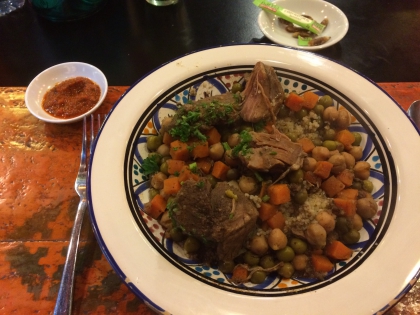
    Succulent couscous au mouton chez Azou au Central Market !

    Delicious mutton couscous at Azou to the Central Market!

    Je rencontre Charlotte, nous papotons un moment puis elle m’invite IMG_4247.jpgà boire un coup chez elle, sympa ! Ce sera un café du Soudan à la cardamone, excellent.

     

    I meet Charlotte there, we chat one moment then she invites me to have a drink at her home, nice! It will be a café of the Sudan in the cardamone, excellent.
  • Barrière à dingos

    IMG_3955.jpg13 juillet

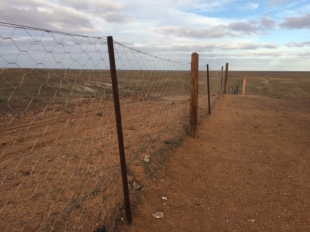
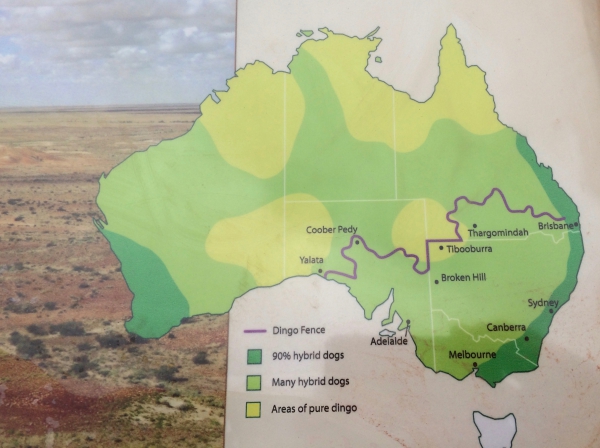
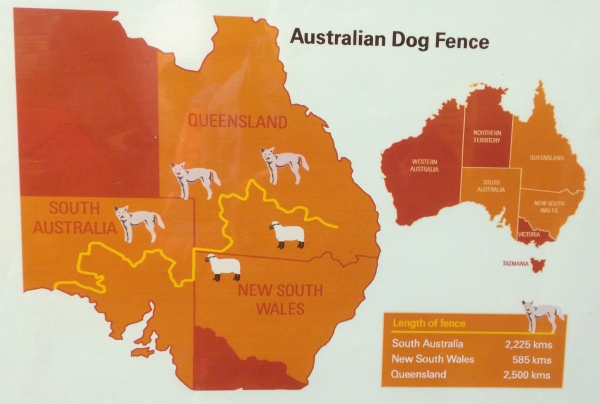
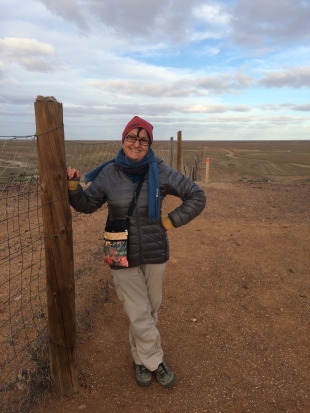
    La Barrière de Chien ou la Barrière de dingo, a été construite pour garder les dingos en dehors des pâturages des moutons du sud. La barrière s'étend maintenant sur 5300 kilomètres de près de Dalby dans le Queensland à près de Nundroo sur la Grande Baie australienne. Deux fois plus long que la Grande Muraille de Chine.

    Dingoes fence - July 13th

    Dog Fence or Dingo Fence, was built to keep dingoes out of sheep-grazing country in the south. The fence now extends for 5300 kilometres from near Dalby in Queensland to near Nundroo on the Great Australian Bight. Twice as long as the Great Wall of China.

    IMG_3956.jpg

    Avant la barrière, les dingos attaquaient les moutons et en tuaient environ 100 moutons par dingo et par nuit !

    Before the barrier, dingoes attacked sheeps and killed approximately 100 sheeps by dingo and a night!

    Il n'y a aucun doute qu'au sud l'Australie le vieux proverbe qui disait « Aucune barrière de chien - aucune industrie du mouton », sonne juste.

    IMG_4111.jpg

    There is no doubt that in south Australia the old saying « No dog fence - no sheep industry », rings true.

    IMG_3776.jpg

  • Capitale mondiale des opales

    IMG_4050.jpgMercredi 13 juillet

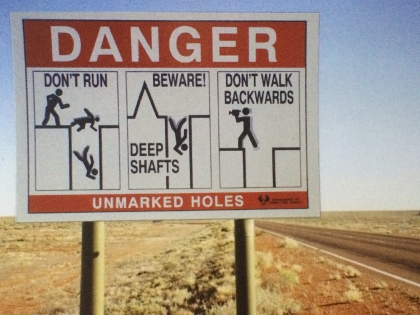
    Voilà les panneaux que l'on trouve par ici !

    Ne courez pas – prenez garde! Puits profonds – Ne reculez pas

    Trous non signalés

    World capital of opals

    Wednesday, July 13th

    Here are the signs which we find here!

    IMG_4173.jpgDon't run – Beware ! Deep shafts – Don’t walk backwards

    Unmarked hole 

    Avertissement - Tous les champs d'opale ont une entrée limitée. L'accès s’obtient plus facilement avec vos guides locaux. Un grand soin doit être pris dans les champs d'opale en raison des milliers de puits ouverts.

    JAMAIS DE PAS EN ARRIÈRE !

    IMG_4127.jpg

    IMG_4172.jpgWarning – All opal fields have restricted entry. Access is best obtained with your local tour guides. Great care must be taken on the opal fields due to the thousands of open shafts.
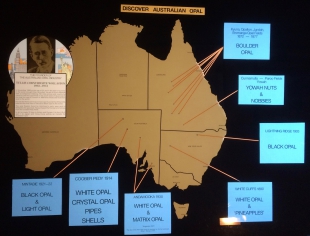
    NEVER STEP BACKWARD!

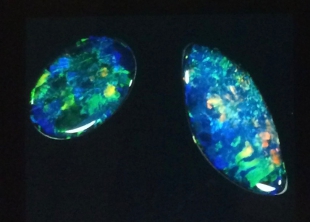
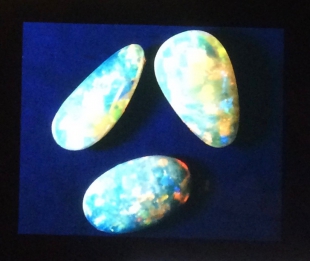
    L’opale est une forme de silice, chimiquement semblable au quartz, mais contenant de l’eau dans la structure minérale. L'opale précieuse contient généralement de 6-10 % d’eau et se compose de petites IMG_4159.jpgsphères de silice arrangées dans un modèle régulier.
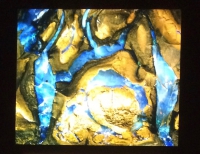
    Opal is a form of silica, chemically similar to quartz, but containing water within the mineral structure. Precious opal generally contains 6-10% water and consists of small silica spheres arranged in a regular pattern.

    Toutes les opales précieuses en Australie-Méridionale arrivent dans IMG_4172 (1).jpgdes roches affectées par l’altération pendant la Période Tertiaire (il y a 1.8 - 70 millions d'années).
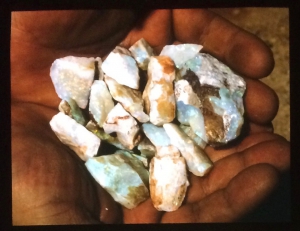
    All precious opal in South Australia occurs in rocks affected by weathering during the Tertiary Period (1.8 – 70 million years ago).

    IMG_4173 (1).jpg